
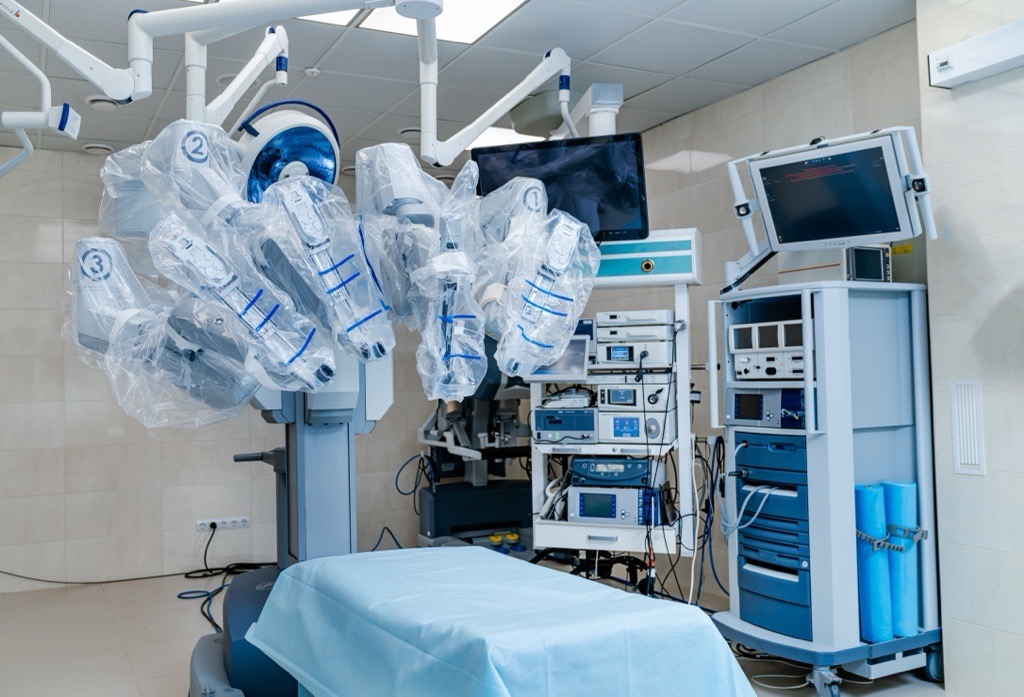
Robotic-assisted surgical systems are technologies that are used to enable physicians to perform interventional surgical procedures with more precision, flexibility and control than is possible with conventional techniques. These technologies provide real-time imaging and feedback to users and can be utilized for pre-operative planning, surgical support and post-hoc analysis. Some systems also include navigation support, AI applications, training modules or allow for remote access.
For which treatments is RAS used?
Robotic-Assisted Surgery (RAS) is used across a wide range of specialities, including urology, gynaecology, orthopaedics, digestive surgery, thoracic surgery, paediatrics, ENT (ear, nose, and throat), and neurosurgery.
The value of RAS
Robotic-Assisted Surgery (RAS) is transforming modern healthcare by making surgery more precise, efficient, and sustainable for the future.
Among its many benefits, RAS offers value to a wide range of healthcare stakeholders, including:
- Benefits for Patients: enhanced surgical precision, reduced complications, shorter recovery times, shorter hospitalisation, and lower post-operative wound infection rates.
- Benefits for Healthcare providers: reduced physical strain on surgeons, streamlined workflows, and advanced training opportunities through virtual simulation and AI, which can accelerate surgeon proficiency by 30 – 50%.
- Benefits for Healthcare systems help ease pressure on healthcare services in the context of EU healthcare challenges, including workforce shortages, demographic shifts such as population ageing, increased demand for a qualified health workforce, and barriers to equitable care.
The barriers to the adoption and diffusion of RAS
Despite its benefits, several barriers continue to limit the broader adoption and diffusion of RAS across healthcare systems and prevent this technology from reaching its full potential.
Some barriers include:
- Limited awareness and understanding of RAS
- Scepticism about patient comfort and concerns over reduced surgical skills
- The lack of adequate reimbursement and funding models
- The absence of coverage recommendations from health technology assessment (HTA) bodies
How to move forward, our recommended policy actions
There is a need to demystify RAS for citizens, patients, healthcare providers, and policymakers through evidence-based, data-driven dialogue, and to position it as a valuable solution to the challenges facing healthcare systems.
Barriers such as fragmented reimbursement and limited awareness of RAS’s long-term value. To move forward, MedTech Europe Robotic-Assisted Surgery Sector Committee recommends a set of coordinated policy actions, including raising awareness of the benefits of RAS, ensuring adequate and sustainable reimbursement, and supporting its broader adoption across healthcare systems.