


My epilepsy does not define me
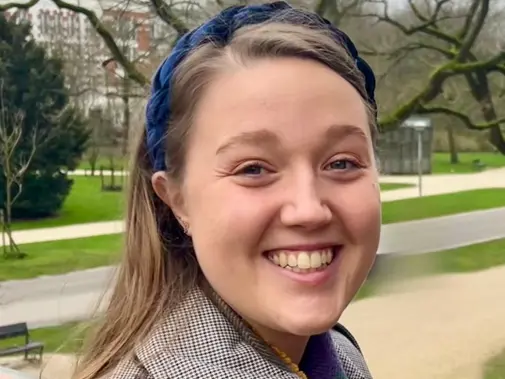
When Alice Gatenby was diagnosed with epilepsy as a medical student, she thought her career was over before it had even started. Today, not only is she a doctor, but she’s advocating for other medics who live with disability. Below, she shares her story on International Day of Persons with Disabilities.
“I began having vague symptoms in 2017, like high-pitched noises, brain fog and fatigue despite sleeping 12 hours a day,” Alice tells MedTech Views. “When I met my partner a couple of years later, he commented on my poor memory and noticed that I was jerking a lot in my sleep. Shortly after that, I had my first major seizure when I was on placement in medical school.”
It was also her first ‘witnessed’ seizure. “I remember being very disoriented and waking up in A&E covered in urine. There was no warning, so I’d hit the floor hard. I was sent home but later that evening I had another large seizure and I was badly injured from the fall, with bruises all over my face,” says Alice.
After that, she was admitted to hospital where she was fast-tracked for numerous tests using medtech. These included blood tests, an electroencephalogram (EEG) which recorded the electrical signals of her brain via small sensors attached to her scalp, a computed tomography (CT or CAT) scan showing x-ray images of her brain and a magnetic resonance imaging (MRI) scan which showed even more detailed images of her brain.
“It was the MRI that revealed the reason for my epilepsy,” Alice explains. “The scan showed damage to the area of my brain that matched the symptoms I’d been having with hearing, etc. The damage to my temporal lobe was due to a traumatic birth, which led to my epilepsy.”
About 50 million people worldwide have epilepsy, making it one of the most common neurological diseases globally.1 It can be difficult to diagnose unless someone is having a seizure, which happens when there are sudden surges of abnormal and excessive electrical activity in your brain.
“I was relieved that they’d found a cause and I got the medication I needed. On the other hand, I was scared about my future as a doctor,” remembers Alice. “Epilepsy is different for everybody. In my case, I’ve had to make certain life-changing adjustments like not being able to drive and taking medications with side effects for the rest of my life, but they don’t hold me back from living my life.”
She’s also very aware of her seizure triggers, which are usually lack of sleep, stress and illness. This means ensuring she always gets at least 8 hours of sleep, among other things.
Being a doctor with an invisible disability comes with another layer of challenges. Alice has had to advocate hard for herself to get people to understand the impact, like the need to make adjustments at work. For example, she can’t work night shifts.
“I’m lucky that I have an amazing support network,” Alice notes. “I’m very open about my condition and this has helped me. It’s also made me passionate about advocating for other doctors who are living with an invisible disability.”
Alice feels that having epilepsy has made her a better human and doctor. “It’s really made me value what’s important in life. I’m a doctor, but I know what it’s like to be a patient,” she says. “Epilepsy does not define you, and it can even become your superpower.”
1. https://www.who.int/news-room/fact-sheets/detail/epilepsy