


Working together for medtech: our conversation with Commissioner Várhelyi
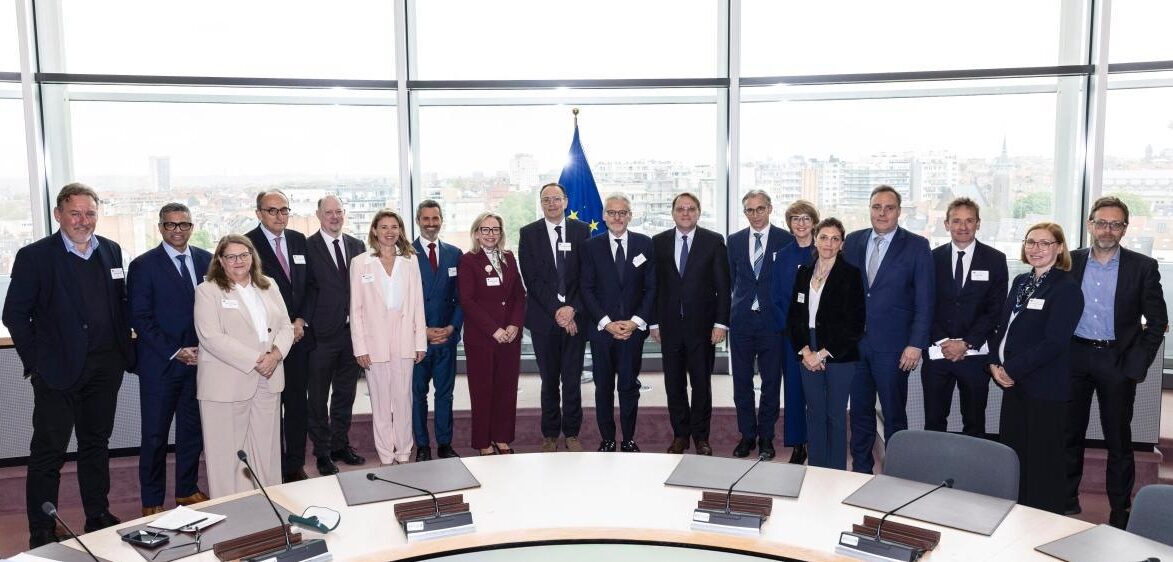
In April 2026, I had the privilege of representing MedTech Europe at the European Health Industry Roundtable hosted by Commissioner Olivér Várhelyi. The meeting brought together five health industry delegations, with medtech sitting alongside four pharma-focused counterparts. I was joined by Bronwyn Brophy, CEO of Vitrolife Group, and Roy Jakobs, CEO of Philips, as well as our colleagues from COCIR — together presenting a united front for the European medtech community.
I want to begin by expressing my sincere gratitude to Commissioner Várhelyi for deliberately choosing to include medical technology in a forum of this kind. These high-level health industry exchanges have historically leaned heavily towards pharmaceuticals, for understandable reasons. Widening that circle to reflect the full spectrum of health innovation is a meaningful step, and one we hope will set a lasting precedent.
Regulatory modernisation: momentum matters
The Commission’s targeted simplification proposal to reform the EU Medical Devices Regulation and In Vitro Diagnostics Regulation is the most consequential regulatory development our sector has seen in years. We welcome it. It reflects genuine engagement with the industry’s concerns about predictability and efficiency, without compromising the safety and performance standards that patients rightly expect.
As made clear in the paper published earlier this week, our overall message to the co-legislators is clear: we support the spirit of this proposal and we are calling for swift conclusion of negotiations. Delay has a cost, and it is ultimately borne by patients and health systems.
Regulatory coherence across the broader EU legislative landscape remains an open challenge. The GDPR, the revised Product Liability Directive, the European Health Data Space Regulation, the AI Act: each of these intersects with our sector in meaningful ways. We need rules that are fit for purpose and consistent with medical device regulation. A fragmented approval environment is not compatible with sustaining medical innovation in Europe.
We also continue to engage constructively on the intersection between EU sustainability legislation and the industrial realities of medtech. We are not asking to be exempted from EU Green Deal ambitions. We are asking that provisions be designed with our sector’s long design cycles, complex global supply chains and diverse product lifespans in mind, and that transition conditions give our industry a genuine and workable path forward.
Tariffs: a burden that ultimately falls on health systems
We appreciate the EU’s active efforts to seek relief for medtech from US tariffs, and the measured, non-retaliatory approach taken so far. Tariffs on materials used in device manufacturing add costs at every stage of the supply chain, ultimately making it more expensive to deliver medical technologies to the patients who need them. For a sector that is deeply globalised and heavily export-oriented, this remains both urgent and unresolved.
We are grateful for the Commissioner’s continued engagement on this front. Medtech operates under fundamentally distinct procurement and reimbursement structures, and the policy solutions proposed must reflect that. We will continue to make that case, and to press for meaningful tariff relief across the board.
Competitiveness: supporting investment, not restricting trade
Europe has the talent, the infrastructure and the regulatory credibility to be a global leader in medical technology. Sustaining that position requires smart, targeted support for European manufacturing, R&D and clinical research. It does not require mandating local production in ways that are incompatible with the global reality of medtech supply chains.
Several Member States are already showing the way. The recently published Dutch medtech growth plan, building on the Draghi competitiveness report, offers a compelling model for how national ambition and EU-level strategy can align around life sciences as a priority sector. We hope to see similar energy across the Union.
The conversation with Commissioner Várhelyi was, above all, a reminder of what is possible when policy and industry engage seriously and in good faith. We were pleased to hear that further roundtable opportunities are planned for later this year, and we intend to keep showing up in exactly that spirit.