


The hidden economic burden of wounds: why Europe cannot afford to ignore wound care


When policymakers discuss the future sustainability of European healthcare systems, considerable attention is rightly given to major challenges such as cancer, cardiovascular disease, diabetes, and mental health. Yet one of the most significant and often under-recognised issues cuts across all these conditions: chronic wounds.
MedTech Europe’s recent White Paper, Shaping the Future of Wound Care in Europe, highlights that between 7.4 and 14.9 million people across Europe are living with chronic wounds. These conditions place a substantial burden on patients, caregivers, healthcare professionals, and health systems, accounting for an estimated 2 – 4% of healthcare expenditure across Europe.
The impact, however, extends far beyond healthcare budgets.
The experience of European countries reinforces this point. In Sweden, for example, analysis from the national Registry for Ulcer Treatment found that introducing structured, registry-based management of hard-to-heal ulcers reduced healing times by 38%, while cutting average treatment costs from SEK 38,223 to SEK 20,496 (corresponding approximately to € 3456 to € 1852) per patient over a three-year period. By standardising care, systematically collecting data and using evidence to guide clinical decision-making, the programme improved outcomes while significantly reducing pressure on the healthcare system.
Recent NHS-led work examining the economic impact of leg ulcers similarly highlights that wounds are not simply a healthcare challenge. They are also a significant barrier to workforce participation, productivity and economic growth.
The report estimates that leg ulcers alone result in between £348 million and £475 million (corresponding to approximately €408.20 million to €557.17 million) in lost economic output each year through sickness absence. Even a small increase in workforce exit linked to wounds could generate a further £108 million (corresponding to €126.70 million) in lost productivity annually.
These findings matter because wounds are often viewed solely as a healthcare issue. In reality, they are also an economic issue.
Chronic wounds can severely affect mobility, independence, mental wellbeing, and the ability to work. Patients frequently experience pain, social isolation, anxiety, depression, and reduced quality of life. Delayed healing can lead to prolonged absences from employment, reduced productivity, and in some cases withdrawal from the workforce altogether.
At a time when many European countries are grappling with labour shortages, demographic change, and rising economic inactivity, these impacts should not be overlooked.
The challenge is set to grow. Europe’s population is ageing, while the prevalence of diabetes, obesity, cardiovascular disease, and vascular conditions continues to rise. All are significant risk factors for chronic wounds. Without action, demand for wound care services will increase at precisely the moment healthcare systems are facing workforce shortages and growing financial pressure.
The good news is that chronic wounds are not inevitable, nor is poor healing.
The evidence highlighted by MedTech Europe and its member wound care group demonstrates that earlier diagnosis, structured care pathways, multidisciplinary working, specialist expertise, and the adoption of innovative technologies can improve healing rates, reduce complications, and lower overall costs. Investments in prevention and early intervention often deliver greater value than treating advanced wounds once they become chronic.
This is why wound care should be viewed as an investment rather than a cost.
Better wound care delivers benefits at multiple levels. Patients experience improved quality of life and greater independence. Healthcare systems reduce avoidable demand on scarce clinical resources. Employers benefit from reduced absenteeism and greater workforce participation. Economies gain through improved productivity and reduced economic inactivity.
Europe has an opportunity to move wound care higher up the policy agenda. By recognising chronic wounds as a strategic health priority, investing in workforce capability, supporting innovation, and aligning reimbursement and procurement with outcomes rather than activity alone, health systems can deliver better care while strengthening economic resilience.
The question is no longer whether Europe can afford to invest in better wound care. It is whether Europe can afford not to.
Related contentthis may interest you

Posted on 13.10.2026
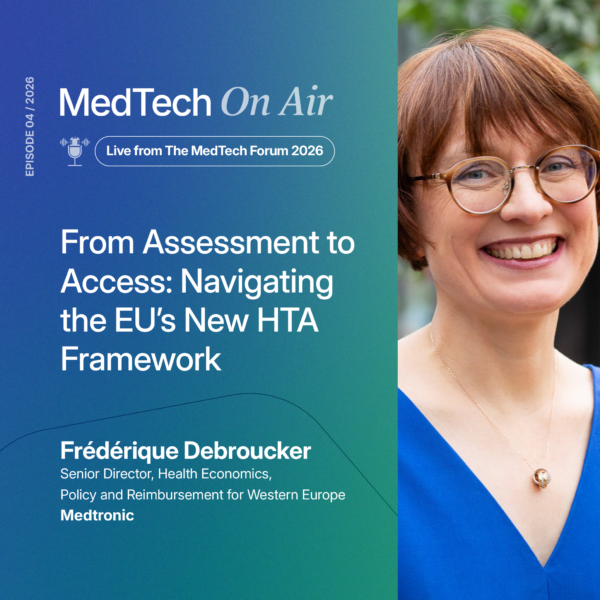
From assessment to access: navigating the EU’s new HTA framework
In early October 2026, the European Commission adopted its first decision to select two medical devices for joint clinical assessment under the EU Health Technology Assessment (HTA). What does this mean for medtech innovators? Tune into the latest episode of MedTech ON AIR, recorded live from our booth at The MedTech Forum 2026, where Frédérique […]