


Grateful for life-saving cervical screening


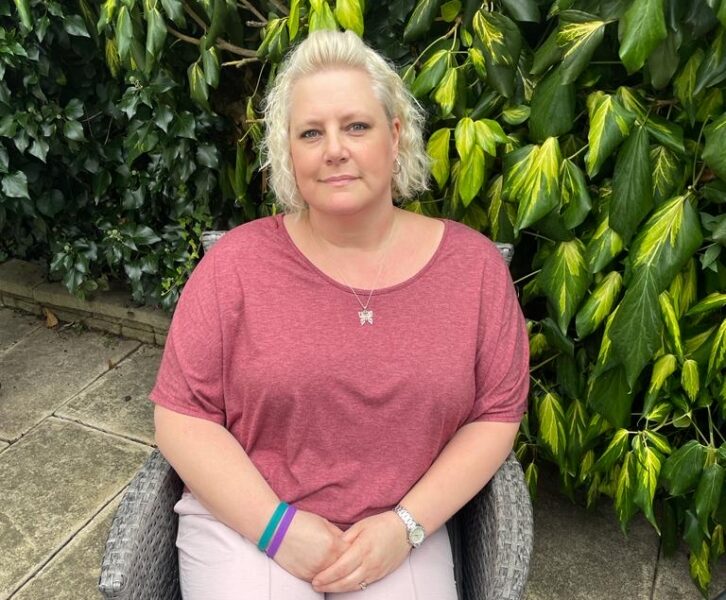
When Michelle Guy went for her regular cervical screening, she expected it to be uneventful as usual. But within weeks, she received a diagnosis that changed her life. The politician from Northern Ireland shares her story below to raise awareness during Cervical Cancer Awareness Month.
“I’d never had any issues whatsoever, so it was disconcerting when I was told that I would need further investigation following my routine cervical smear,” she tells MedTech Views.
Many countries have a programme where women and people with a cervix are invited for a regular cervical screening (or ‘smear’) test. It checks for a high-risk type of human papillomavirus (HPV) which can cause abnormal cell changes that may lead to cancer over time. During the test, a nurse or doctor uses a small brush to take a sample of cells from your cervix (womb entrance). It’s sent to a laboratory where medical technology can detect whether high-risk HPV is present. If so, the sample is also tested for cell changes.
After abnormal cell changes were detected, Michelle had a colposcopy, which allowed her doctor to get a closer look at her cervix by using a large magnifying lens with a light called a colposcope. “When I was sent for the colposcopy I got a bad feeling because the doctor was asking me questions about my symptoms. I had no symptoms at all,” she remembers. “I was then red flagged for a biopsy.” This involved taking a small tissue sample from her cervix so that the cells could be examined under a microscope.
“Around a week later, I got a call asking me to come into the doctor’s office, where I was told that I had cervical cancer and I would need a radical hysterectomy,” Michelle says. “The good news was that they’d caught it early, but I still needed a magnetic resonance imaging scan to confirm the diagnosis. So, the reassurances were clouded with stress and uncertainty as I waited for that. The process of waiting for more information between each step was extremely challenging.”
The MRI confirmed her diagnosis and Michelle went for surgery to eliminate the cancer by removing her uterus, cervix, surrounding tissues and pelvic lymph nodes. “It was scary, but I’m glad that I was able to get the treatment I needed,” she comments. “I dread to think what would’ve happened if it hadn’t been caught early.”
Michelle is grateful for the medtech that supported her from diagnosis to treatment and has started sharing her journey to raise awareness about the importance of screening and early diagnosis. “I want to convey the message that going for your regular smear test is the best opportunity to have issues addressed early,” she says, urging women not to put it off. “I know it can be uncomfortable, but it’s worth your time and that bit of awkwardness.”
While still coming to terms with everything that’s happened, Michelle is determined to use her role as an Assembly Member to support other women and spread the word. “Getting a cancer diagnosis changes you. I still have five years before I’m ‘signed out’ which is stressful, but overall I’m in a good place.”