


Refusing to be beaten by bowel cancer

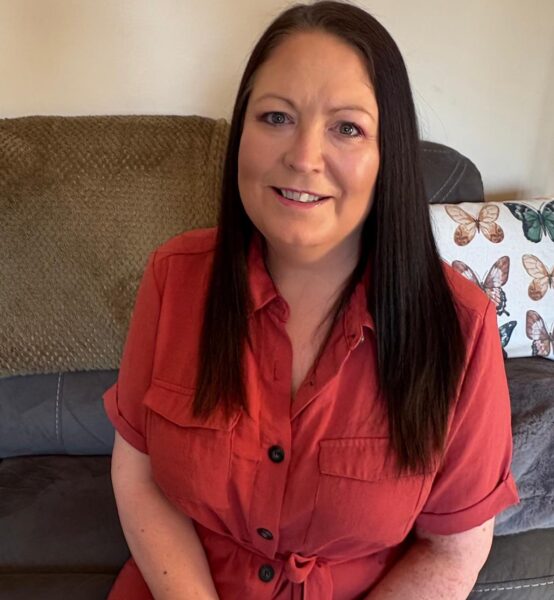
It started as abdominal pains that doctors attributed to normal pregnancy-related digestive issues. But when Emma Campbell’s pain didn’t go away after her daughter’s birth, she started to get worried. Below, she shares her story during Bowel Cancer Awareness Month.
“I was pregnant with my third child. The spasms were so severe that I’d be bed bound for a day or two. But then I’d be fine again for a while,” says Emma. “One episode was so bad that I ended up going to hospital. All was fine with the baby, but I was severely constipated so they put it down to that, gave me laxatives and sent me home.”
The pain persisted after Emma’s daughter was born in May 2019. “Now that I knew it wasn’t due to the pregnancy, I was more concerned,” she notes. “I saw an advert on social media for a home bowel screening test and something told me to do it.” A faecal immunochemical test (FIT) uses medical technology to detect traces of blood in a person’s poo, which can flag cancer or polyps, benign growths on the inner lining of the colon or rectum that can develop into cancer if left untreated.
“I’d noticed that there was blood in the stool sample that I’d sent off, and the lab results confirmed that high levels of blood were present. I was advised to go to my doctor with the results,” Emma remembers. Despite having a number of symptoms, her doctor wasn’t overly concerned due to her age.
After further FIT screenings, a colonoscopy was ordered to rule out Crohn’s disease. The procedure involved a flexible tube with a camera being inserted into her rectum and navigated through her large bowel to the end of her small intestine. The doctors also performed a biopsy to take tissue samples for lab analysis using medtech.
“The possibility that it might be cancer wasn’t mentioned, so I was in complete shock when they told me that they’d found a tumour during the colonoscopy,” Emma notes. “I went home and clung to the hope that it wasn’t cancer while I waited for the biopsy results. Not only did the biopsy confirm that it was cancer, but a CT scan showed that it had spread to my liver. I would need chemotherapy and surgery for the best chance of a cure. My daughter was 8 months old, and my sons were four and six.”
Emma faced months of chemotherapy and immunotherapy, and by the end of 2020, scans including computed tomography (CT) and magnetic resonance imaging (MRI) to view her bowel and liver, as well as blood tests, showed there was no evidence of disease. But her cancer story didn’t end there.
“The cancer in my liver has come back twice since then. This was picked up during my regular CT scans. Both times I had robotic keyhole surgery to remove part of my liver,” she explains. “It blows my mind what they can do.” She has CT scans twice a year and has been all clear for two years.
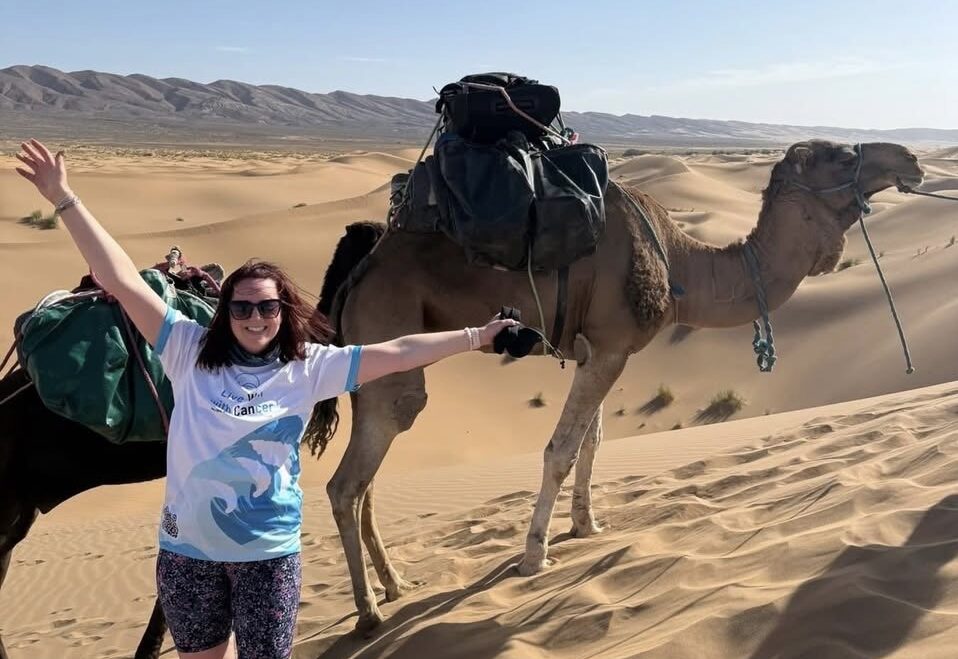
Emma believes her attitude has helped her to recover. “It hasn’t been easy, but I think it’s important to flip the negatives and focus on the positives. There are so many positives regarding how I live my life,” she comments. “I’ve had the courage to do things that I never would have done before, like climbing Kilamanjaro and doing a 100-kilometre trek in the Sahara for charity. I want my children to be inspired by me every day.”