


Moving forward with prosthetic legs
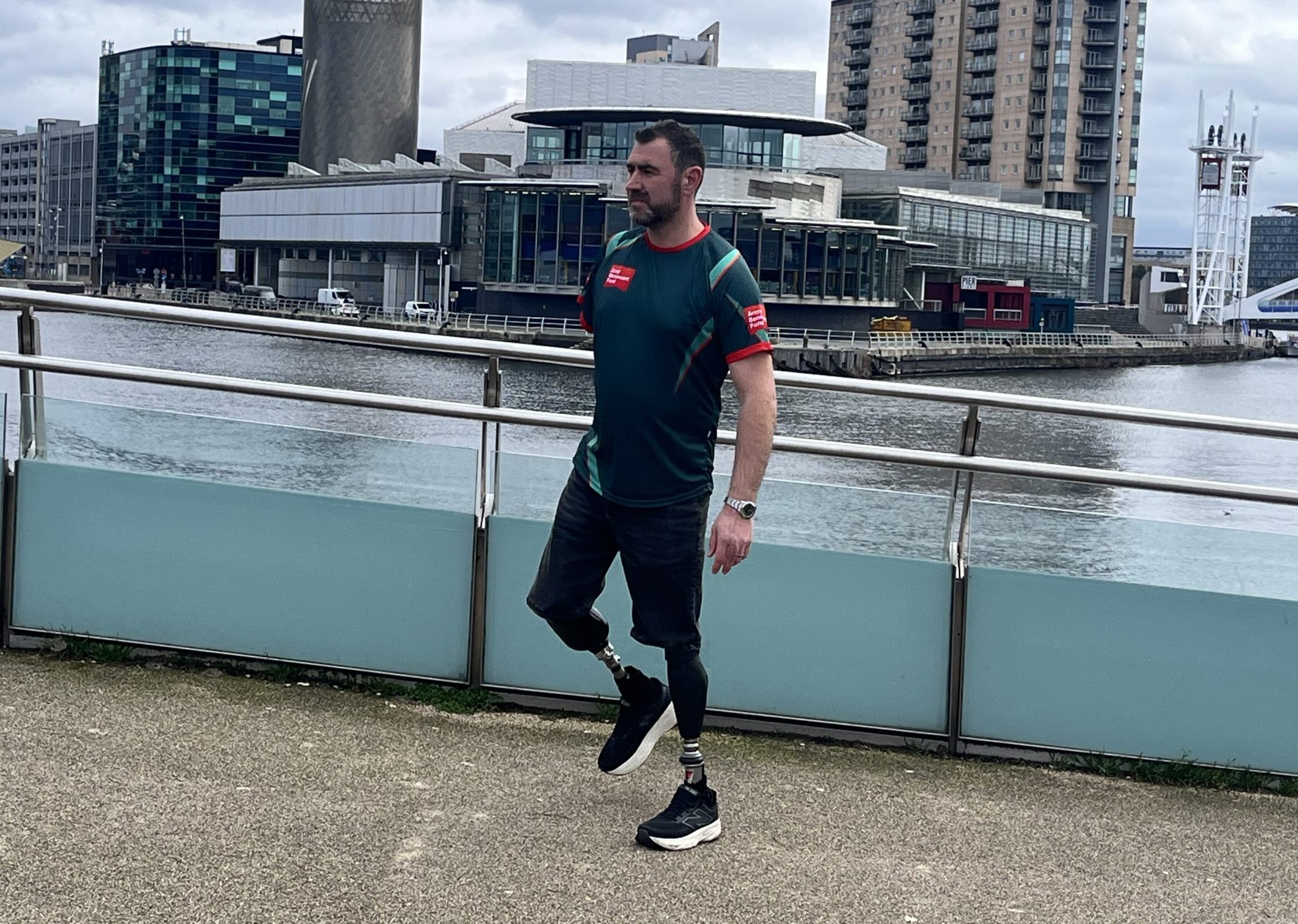
Corporal Andy Reid was serving in Afghanistan when he stepped on an explosive device and lost three limbs. At 33 he faced an uncertain future, but he refused to let it beat him. That mindset and the support of technology allow him to live a full life and motivate others every day.
“After the accident I was flown straight back to the UK. When I woke up, I found out that I’d lost my right leg below the knee, my left leg above the knee and my right arm,” the motivational speaker tells MedTech Views. “Once I’d had surgery, I decided that I just needed to get on with things and make the best of my situation. About three months later, I took my first steps on my prosthetic legs.”
Andy has seen a lot of change in the medtech used for prosthetic limbs since he was injured in 2009. “My first legs used carbon fibre, which was relatively new tech at the time. It’s great material as it’s super strong and light and moulded to the shape of your limbs” he explains. “It was hard work to learn how to walk as I had to lock my knee in order to pivot, but it was a massive advancement compared with the materials used in older legs.”
A year later, the medtech had advanced further and Andy’s left leg was fitted with an artificial limb that had a microprocessor-controlled knee. “It uses Bluetooth technology that constantly adapts to the situation when I put pressure on my leg. If I stumble, it automatically adjusts so that I don’t fall,” he points out, noting that historically, prosthetic innovation is often linked to times of conflict. “When young soldiers come back injured, they still want to be active. This pushes the technology forward.”
Andy benefitted from more medtech advances a few years later, when he got another left leg. “It’s still got a microprocessor but it’s even more intuitive and it’s waterproof,” he comments. “I can programme it for different activities like squatting, cycling and skiing. It’s also attached using osseointegration, which allows me to walk further and sit for longer.” The latter required a surgical procedure that permanently implanted a titanium rod into Andy’s residual bone, allowing his artificial limb to attach directly to his skeleton. This eliminated the need for a traditional socket, which can cause issues like chafing, sweating and poor fit that affect mobility.
As for his arm, Andy used a prosthetic for a couple of years, but he felt that it wasn’t as intuitive as the legs and decided that he could function well without it. “There are so many clever technological adjustments that I’ve made to make everyday tasks possible,” he says. “One thing that surprises people is that I can drive.”
After the incredible support that Andy received from charities like the Army Benevolent Fund, he feels it’s important to give back. He’s done all sorts of fundraising challenges from climbing Kilimanjaro to being the first triple amputee to complete the London marathon. He’s also written a book and set up his own charity, The Standing Tall Foundation, to help support veterans and people with mental health issues. To acknowledge his voluntary service to veterans and his charitable work helping people with disabilities, Queen Elizabeth II awarded him with a Member of the Order of the British Empire (MBE) in 2019. His motivation comes from honouring his fellow colleagues who didn’t come home and “wanting to show people what can be achieved with the right mindset and technology.”